Red Light Therapy: How It Works and How to Use It Effectively
Among home wellness tools with a substantial research base, red and near-infrared light therapy is one of the most widely studied — and often misunderstood by first-time users.
Photobiomodulation, the interaction of specific wavelengths of light with biological tissue, has been explored across thousands of published studies. Much of this research focuses on how red and near-infrared light interact with cellular processes, particularly within the mitochondria.
This guide explains how it works, how to structure a daily protocol, how to combine it with heat and cold exposure, what to look for in a home system, and the common mistakes that limit results.
How Red and Near-Infrared Light Interact with the Body
Red light (630–660nm) and near-infrared light (800–850nm) are absorbed by photoreceptors within cells — often discussed in relation to mitochondrial function.
One commonly studied target is cytochrome c oxidase, an enzyme involved in the electron transport chain. Research has explored how light exposure at these wavelengths may influence cellular energy processes, often described in terms of ATP (adenosine triphosphate) production.
These mechanisms are frequently discussed in the context of:
- cellular energy use
- tissue response to light exposure
- broader physiological adaptation over time
Near-infrared light penetrates deeper into tissue — approximately 2–4 inches (5–10 cm) — reaching muscle and joint structures that red light alone does not. This is why full-spectrum systems, combining both wavelengths, are often used for broader applications.
The Daily Protocol: How to Use Red Light Therapy
One of the most common issues with red light therapy is not the technology itself, but how it is used.
Consistency, distance, and exposure time all matter.
Distance
Position yourself:
- 6–12 inches (15–30 cm) from the panel
This range typically allows for effective irradiance without exceeding optimal exposure levels. Light-based therapies often follow a dose-response relationship, meaning both underexposure and overexposure can reduce effectiveness.
Duration
- 10–20 minutes per treatment area
For full-body panels:
- ~15 minutes per side (front/back)
Frequency
- 5–7 sessions per week for consistent use
- Daily use is common in general wellness routines
Many users report that consistency over several weeks is where the most noticeable changes occur.
Timing
Morning:
- Often used as part of a daily routine
- Can be paired with other morning habits
Evening (1–2 hours before bed):
- Can be incorporated into wind-down routines
- Red and near-infrared wavelengths are often discussed as distinct from blue light in how they interact with circadian rhythms
Both options work — consistency matters more than timing.
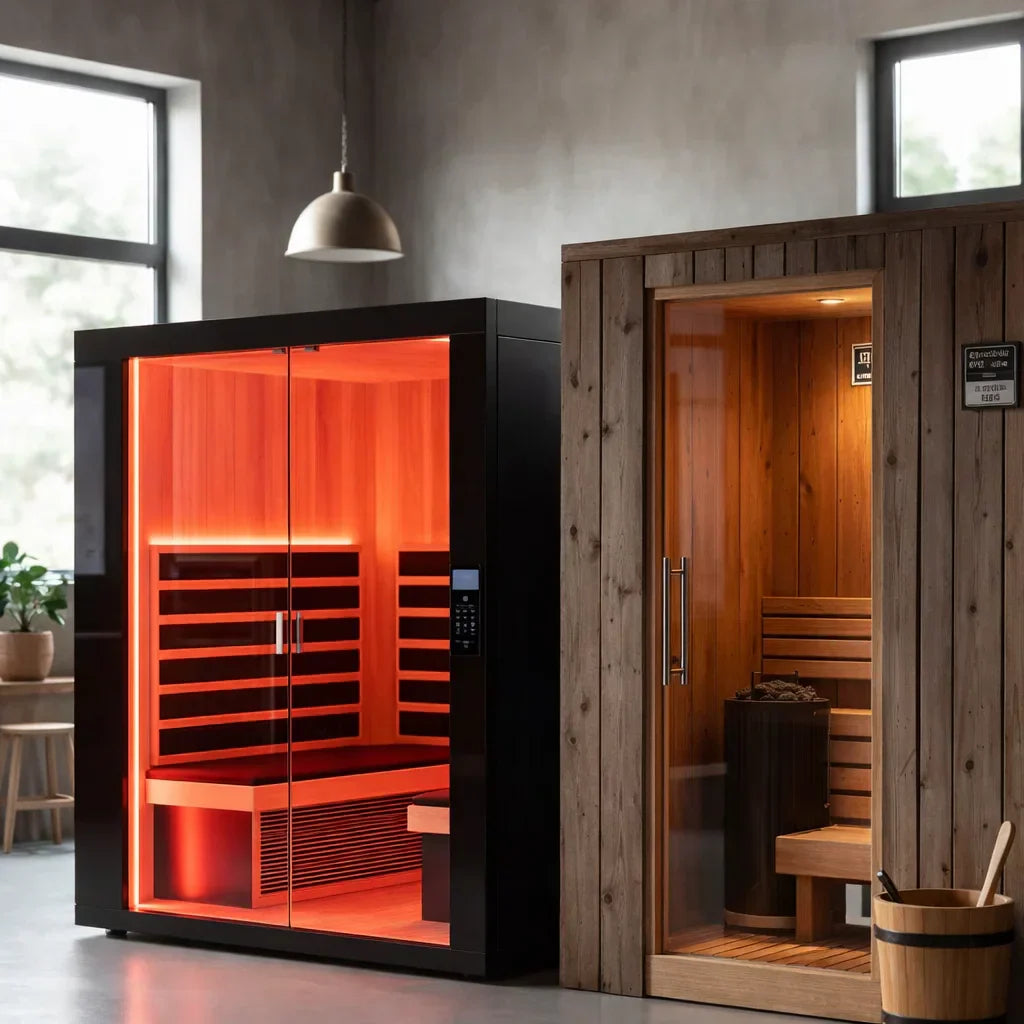
Combining Red Light with Sauna and Cold Plunge
Red light therapy is often used alongside heat and cold exposure.
There are three common approaches:
Red Light Before Sauna
A short session (10–15 minutes) before heat exposure is sometimes used as part of a structured routine. This sequence is often discussed in the context of preparing the body for heat exposure.
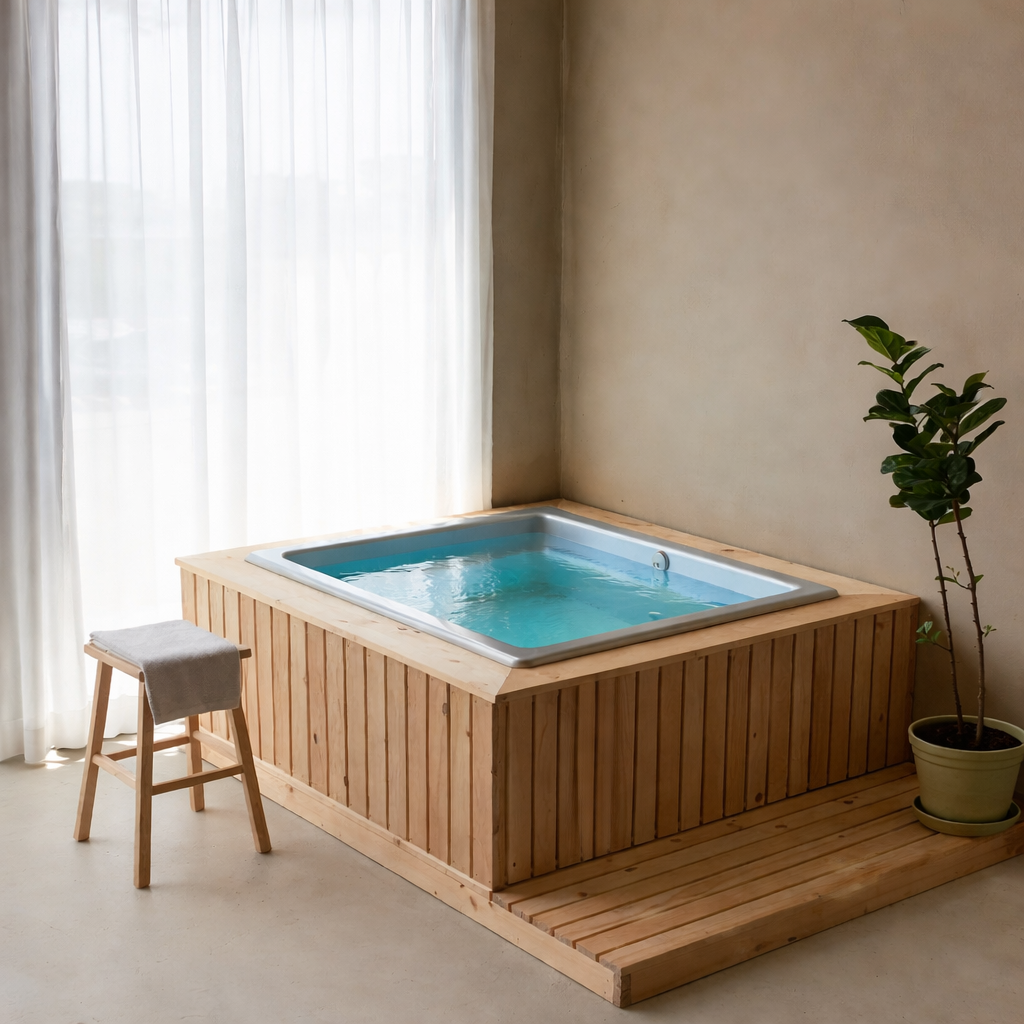
Red Light After Cold Plunge
Cold exposure creates a strong sensory and physiological shift. Following it with red light is a common pairing in routines focused on recovery and overall wellness.
Red Light as a Daily Anchor
Many people use red light therapy as a consistent daily practice — for example, 10–15 minutes each morning — and layer in sauna or cold plunge sessions several times per week.
This approach emphasizes consistency while keeping total time commitment manageable.
Common Red Light Therapy Myths
Myth: “It’s just heat”
Reality:
Red and near-infrared light operate within specific wavelength ranges. The interaction with tissue is wavelength-dependent and differs from general heat exposure.
Myth: “More time and power is always better”
Reality:
Light exposure follows a dose-response curve. More is not always better — appropriate distance, duration, and intensity all matter.
Myth: “Results should be immediate”
Reality:
Most users report gradual changes over time with consistent use. The experience is often cumulative rather than immediate.
Myth: “All panels are the same”
Reality:
Devices vary significantly in:
- wavelength accuracy
- irradiance output
- flicker characteristics
- EMF levels
These differences can affect usability and consistency.
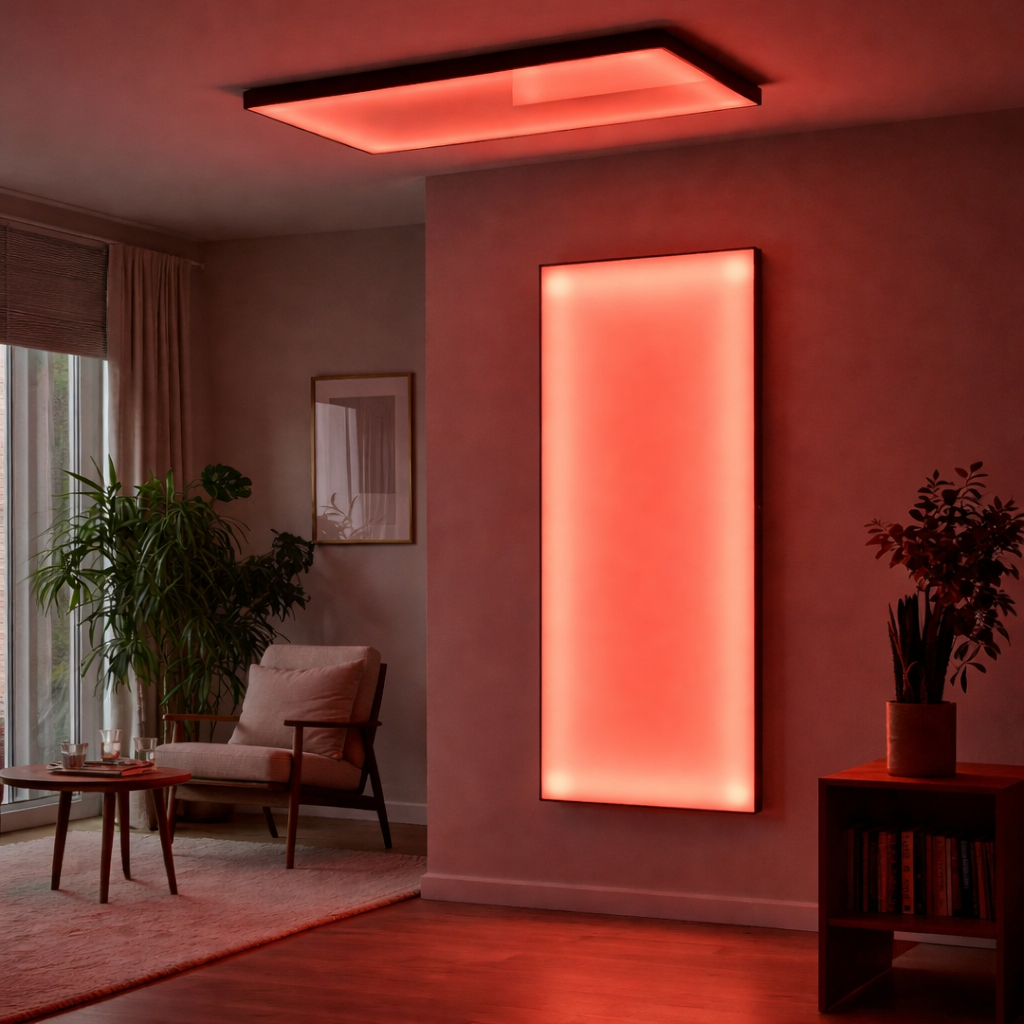
What to Look for in a Home Red Light Panel
Wavelength Accuracy
Look for panels that deliver:
- 660nm (red)
- 850nm (near-infrared)
Third-party testing is preferable to manufacturer-only specifications.
Irradiance
- Minimum: ~50 mW/cm² at treatment distance
- Premium range: 100–175 mW/cm² at 6 inches (15 cm)
Lower irradiance often requires longer session times.
Flicker-Free Drivers
Constant-current drivers eliminate perceptible flicker and provide more consistent light output over time.
EMF Output
Low-EMF design is important for devices used in close proximity and at high frequency.
Coverage Area
- Full-body panels: efficient for whole-body sessions
- Targeted panels: useful for smaller areas
Your use case should determine panel size.
Building a Consistent Routine
Red light therapy is most often used as part of a broader routine rather than a standalone intervention.
Its value comes from:
- consistent use
- appropriate setup
- integration with other practices like sauna or cold exposure
For most people, a simple daily structure — even 10–15 minutes per day — is more effective than occasional longer sessions.
|
Start Your Red Light Journey The Solevo Red Light Therapy Collection delivers clinical-grade 660nm and 850nm wavelengths at therapeutic irradiance — engineered for daily home use and designed to integrate into a considered wellness space. |
Scientific References
1. Hamblin MR (2016). BBA Clinical https://pubmed.ncbi.nlm.nih.gov/27752476/
2. Zhao J et al. (2012). Journal of Athletic Training https://pubmed.ncbi.nlm.nih.gov/22540055/
3. Leal-Junior EC et al. (2015). Lasers in Medical Science https://pubmed.ncbi.nlm.nih.gov/26042813/
Disclaimer
|
This content is for educational purposes only and is not intended as medical advice. Always consult a qualified healthcare professional before beginning any wellness or health protocol. |