Infrared vs. Traditional Sauna: What Actually Matters
Few topics generate more debate in the home wellness space than infrared vs. traditional sauna.
Both approaches are widely used. Both have research behind them. And both can play a role in a consistent heat-based routine.
But they are not the same tool — and the difference matters when you are making a meaningful investment in your home setup.
This guide provides a clear comparison: how each type works, what research has explored in terms of long-term use, the practical differences in installation and experience, and how to decide which is the right fit — or whether a combination makes sense.
How Traditional Finnish Sauna Works
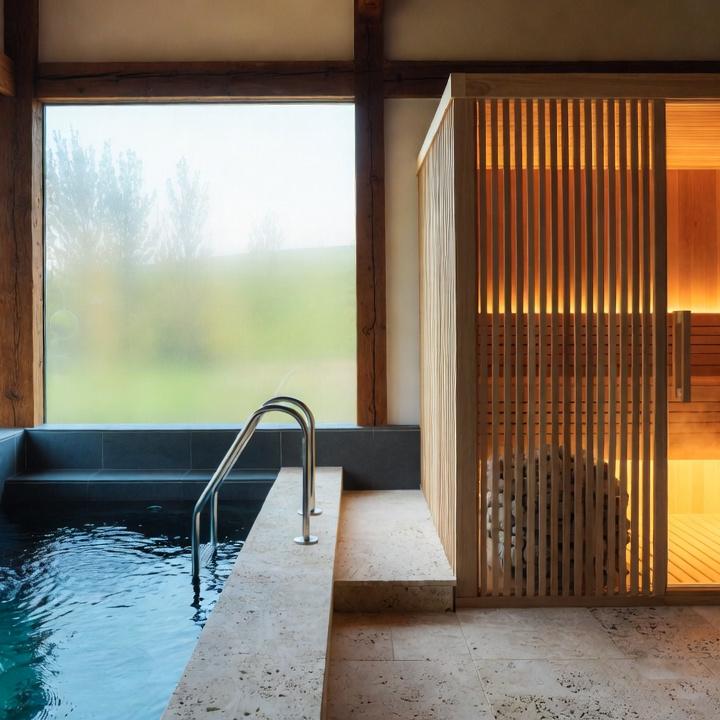
Traditional Finnish sauna heats the air in an enclosed space — typically to 158–212°F (70–100°C) — using an electric or wood-fired heater with sauna stones.
The body warms through a combination of hot air exposure and radiant heat. Adding water to the stones creates löyly — a burst of steam that increases perceived heat and humidity.
During a session, body temperature rises and heart rate increases, often reaching levels comparable to moderate physical activity. This heat exposure has been widely studied in the context of cardiovascular and overall wellness routines.
Long-term observational research — particularly from Finnish cohorts — has explored associations between frequent sauna use and a range of cardiovascular and lifestyle-related outcomes. This body of research is often referenced in discussions around sauna use and long-term routine building.
How Infrared Sauna Works
Infrared saunas operate differently.
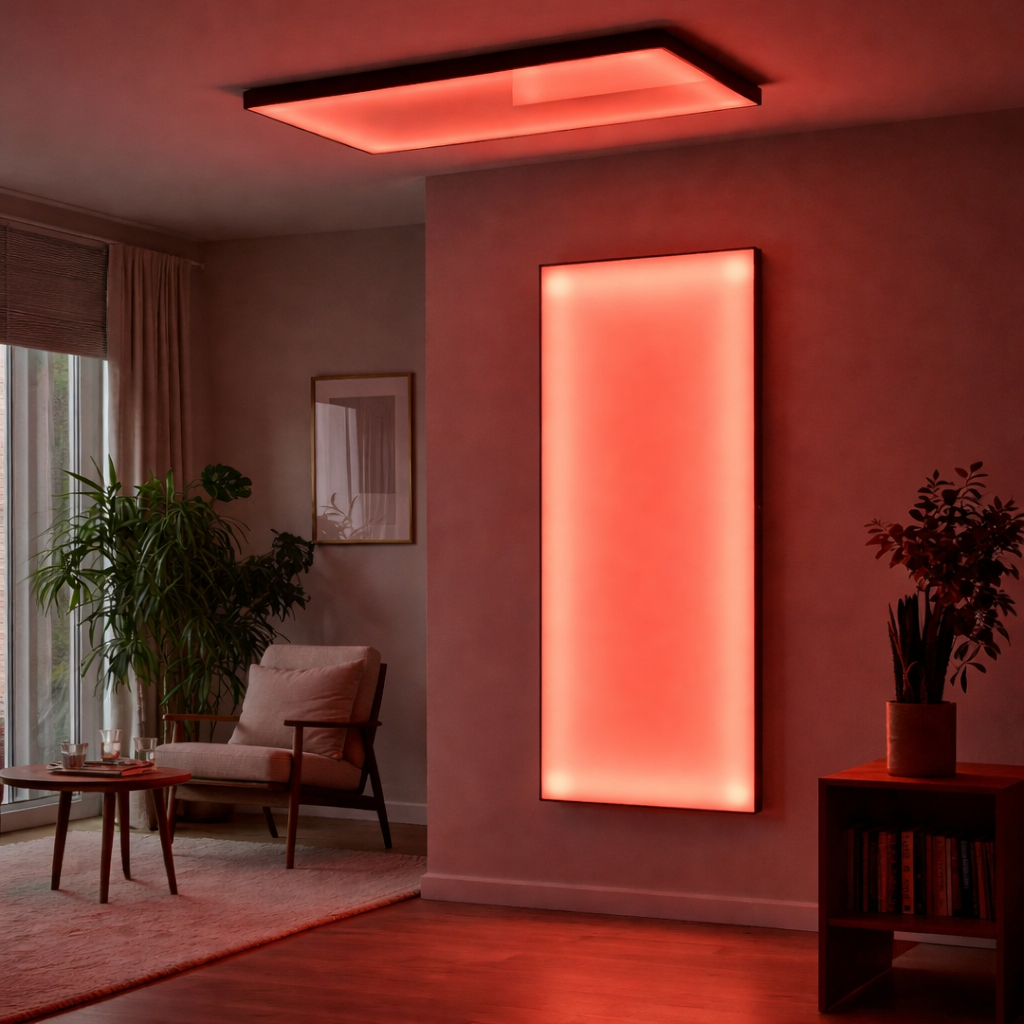
Instead of heating the air to high temperatures, infrared panels emit wavelengths of light that are absorbed by the body. This creates a warming effect without requiring the same level of ambient heat.
Typical air temperatures:
- 113–149°F (45–65°C)
Despite the lower air temperature, users can still experience:
- elevated body temperature
- significant sweating
- a sustained heat session
Full-spectrum infrared systems combine near, mid, and far-infrared wavelengths.
Near-infrared light has been studied in the context of photobiomodulation — a process involving light interaction at the cellular level. This is often discussed separately from traditional sauna use and is one of the key distinctions of infrared systems.
The Comparison: Science, Installation, and Experience
Cardiovascular and Long-Term Research
Traditional sauna has one of the most established bodies of long-term observational research, particularly in Finnish populations. These studies have explored associations between regular sauna use and cardiovascular and lifestyle-related outcomes over extended periods.
Infrared sauna has a growing body of research, particularly in clinical and controlled settings. While promising, the research is more recent and less standardized across protocols.
Verdict:
Traditional sauna has a longer-established research base. Infrared continues to expand in studied applications.
Heat Type and Photobiomodulation
- Traditional sauna: Heated air and radiant heat
- Infrared sauna: Direct light-based heating of the body
Full-spectrum infrared systems introduce an additional component through near-infrared wavelengths, which are often discussed in the context of light-based cellular interaction.
Verdict:
Infrared offers an additional light-based component. Traditional provides a more intense high-temperature environment.
Installation and Electrical Requirements
Traditional sauna:
- Typically requires a 240V high-amperage circuit
- Requires a dedicated room or outdoor structure
- May include vapor barrier, ventilation, and flooring considerations
- Heat-up time: 20–40 minutes
Infrared sauna:
- Many models operate on 120V standard outlets
- Can be installed in a bedroom, basement, or garage
- Minimal construction requirements
- Heat-up time: 5–15 minutes
Verdict:
Infrared is generally simpler and more flexible to install.
Session Length and Accessibility
Traditional sauna:
- 15–20 minutes per round
- Higher heat intensity
- Often requires gradual adaptation for new users
Infrared sauna:
- 30–40 minutes per session
- Lower temperature environment
- Often perceived as more accessible for beginners
Verdict:
Infrared is more accessible. Traditional offers a higher-intensity heat experience.
Recommended Protocols
Traditional Finnish Sauna Protocol
- 15–20 minutes at 170–190°F (77–88°C)
- Cool down for 5–10 minutes (cold air, shower, or plunge)
- Rest 10 minutes
- Repeat 2–3 rounds
Typical frequency:
- 4–7 sessions per week in long-term routines
Hydration:
- ~16 oz (500 ml) of water or electrolytes before and after
Infrared Sauna Protocol
- 30–40 minutes at 130–150°F (54–66°C)
- Typically performed as a single extended session
Preheat:
- 10–15 minutes before entering
Hydration:
- Maintain fluid intake throughout
Contrast Therapy (Either Sauna Type)
- Sauna → cold plunge at 50–59°F (10–15°C) for 3–5 minutes
- Rest 10 minutes
- Repeat 2–3 rounds
End on:
- Cold → more alert feeling
- Heat → more relaxed feeling
This combination is commonly used in routines focused on recovery and overall wellness.
Pairing Either Sauna with a Cold Plunge
Adding a cold plunge introduces a temperature contrast element that changes the overall experience.
Alternating between heat and cold creates a repeated shift in how the body responds to temperature. This is often described as a circulatory or “pumping” effect and is widely incorporated into performance and recovery routines.
If space allows, placing a cold plunge within a few steps of the sauna creates a more seamless setup and improves consistency of use.
Which Should You Choose?
Choose Traditional Finnish Sauna if:
- You prefer higher heat environments
- You want the most established long-term research base
- You have space and electrical capacity for installation
- The traditional sauna experience (including steam) matters to you
Choose Infrared Sauna if:
- You prefer a lower-temperature environment
- You want a simpler installation
- You are new to heat exposure
- You value the inclusion of light-based (infrared) components
Choose Both if:
- Space and budget allow
- You want both high-temperature sessions and lower-intensity options
- You prefer flexibility across different types of sessions
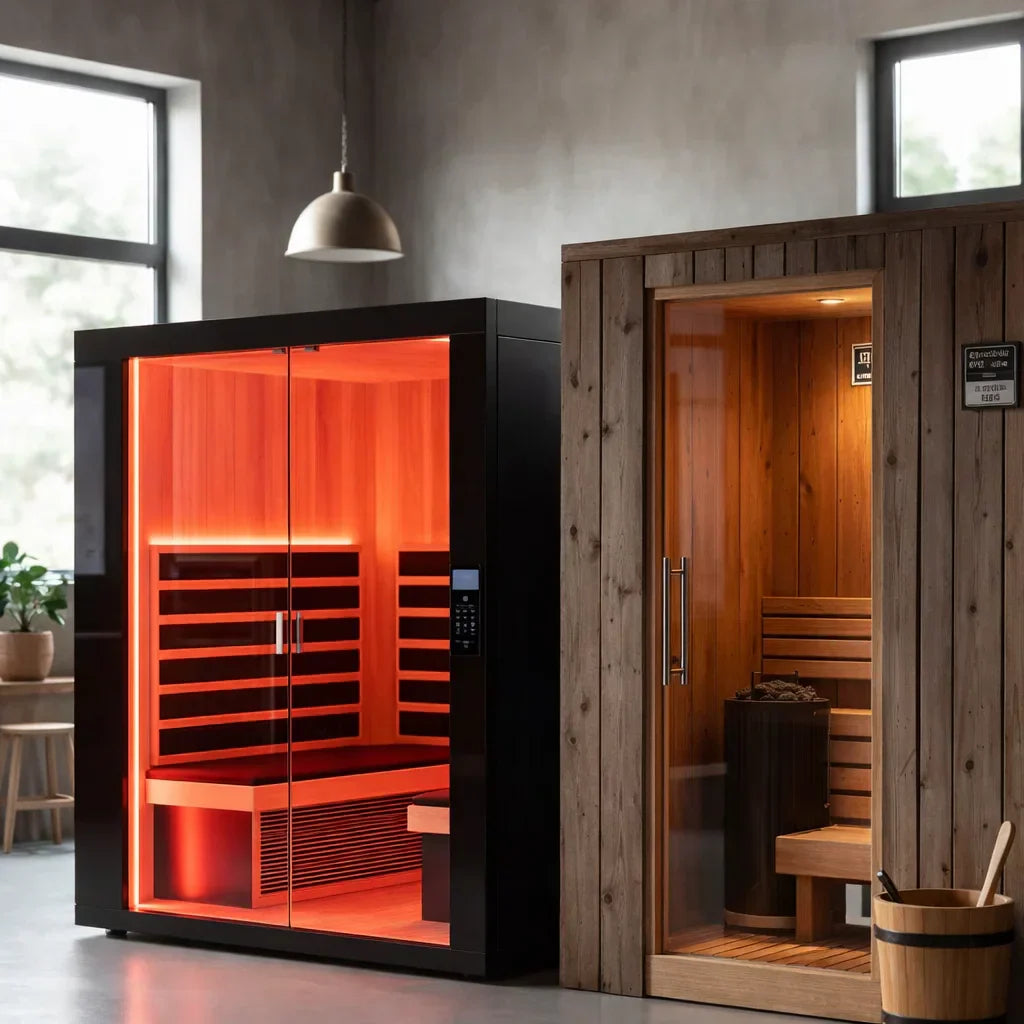
At a Glance: Side-by-Side Comparison
| Factor | Traditional Finnish | Infrared |
|---|---|---|
| Air temperature | 158–212°F (70–100°C) | 113–149°F (45–65°C) |
| Session length | 15–20 min/round | 30–40 min/session |
| Photobiomodulation | None | Yes (full-spectrum) |
| Research base | Extensive (long-term observational) | Growing |
| Installation | High (240V, dedicated space) | Lower (often 120V) |
| Löyly (steam) | Yes | No |
| Heat-up time | 20–40 min | 5–15 min |
| EMF | Low | Low (quality systems) |
| Best for | High heat experience, traditional setup | Accessibility, flexibility, lower temp |
|
Elevate Your Recovery Solevo infrared saunas are engineered for clinical-grade full-spectrum output — near, mid, and far-infrared in a single session. Built for daily home use and designed to live beautifully in a considered space. |
Scientific References
1. Laukkanen T et al. (2015). JAMA Internal Medicine https://pubmed.ncbi.nlm.nih.gov/25705824/
2. Tei C et al. (2009). Journal of Cardiac Failure https://pubmed.ncbi.nlm.nih.gov/17174864/
3. Hamblin MR (2016). BBA Clinical https://pubmed.ncbi.nlm.nih.gov/27752476/
Disclaimer
|
This content is for educational purposes only and is not intended as medical advice. Always consult a qualified healthcare professional before beginning any wellness or health protocol. |